




Why Germany is a Top Destination for International Students in 2026
5 mins read


Share


Updated at: 15 September, 2026

By Tony Raouf
5 mins read
Updated at: 15 September, 2026
By Tony Raouf
Share
Germany has long stood as a beacon for those seeking more than just a degree; it is a place where centuries of academic tradition meet the cutting edge of modern technology. The decision to move abroad is a pivot point for many people in their lives, and choosing a country that balances world-class standards with an accessible lifestyle is beyond important.
Known globally as the "Land of Ideas," this European powerhouse offers a unique ecosystem where students aren’t just observers but active participants in innovation. Whether you are drawn by the prospect of studying in high-tech laboratories or the charm of historic university towns, the German educational landscape provides a stable, welcoming, and intellectually stimulating environment that prepares graduates for a globalised workforce.
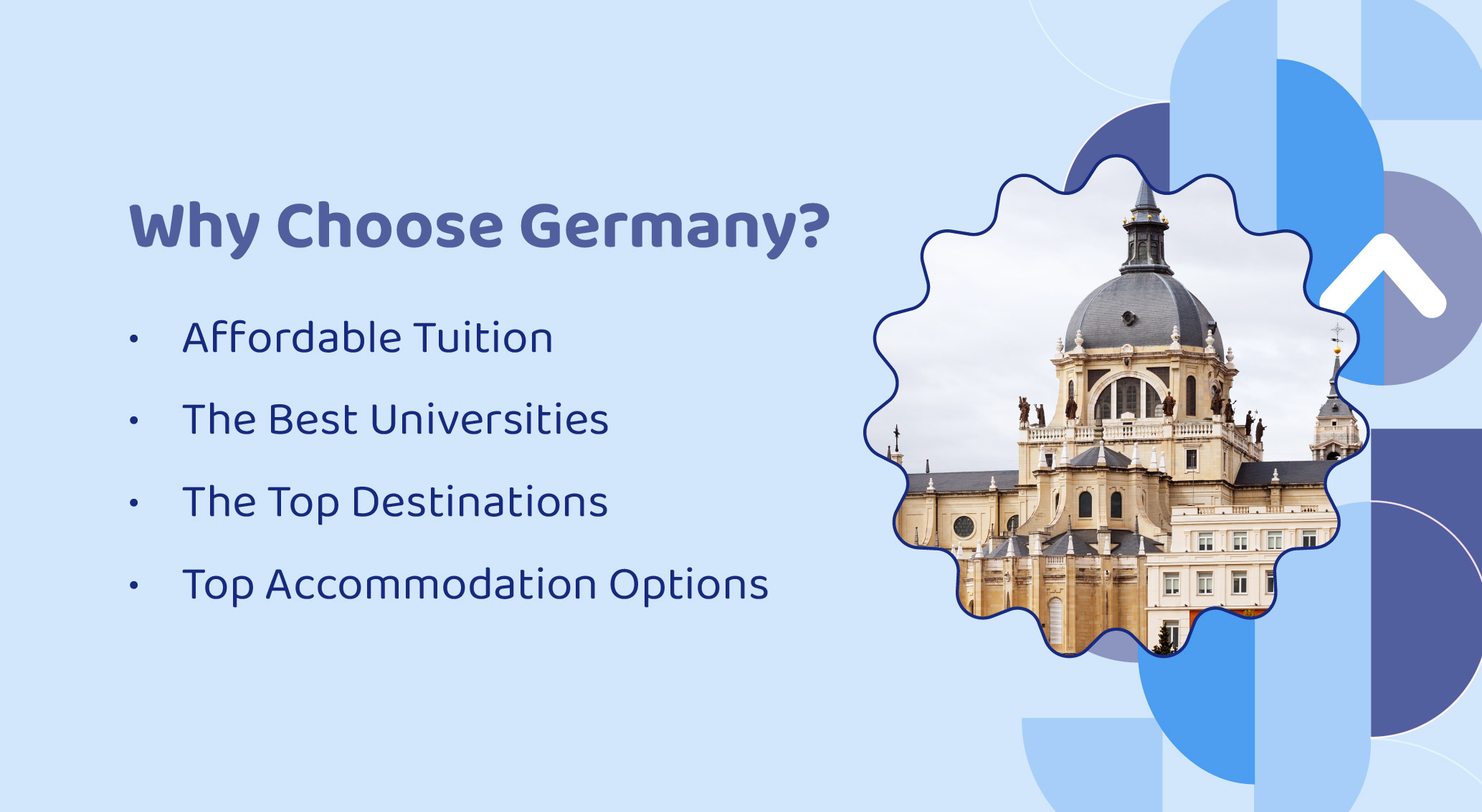
Higher Education Without the Financial Burden
One of the most compelling reasons to choose this destination is the unique approach to tuition. Unlike many other global education hubs where student debt can follow graduates for decades, the majority of public institutions here do not charge tuition fees for undergraduate and most master’s programs. Instead, students contribute a small semester fee that usually covers administrative costs and, quite often, a "semester ticket" for unlimited local public transport.
This model reflects the belief that education is a public good rather than a commercial product. By removing the barrier of high tuition, the country ensures that talent is the primary driver of academic success. This financial freedom allows you to focus more on your research, internships, and cultural immersion rather than worrying about the accumulating costs of your education.
Navigating the Landscape of Top-Ranked Universities in Germany
When you look at global rankings, German institutions consistently secure high positions, particularly in the fields of engineering, natural sciences, and medicine. These top-ranked universities in Germany are known for their rigorous academic standards and a strong emphasis on research. For instance, the Technical University of Munich (TUM) and Ludwig Maximilian University of Munich (LMU) are favourites, often leading the way in innovation and humanities, respectively.
Other notable institutions include Heidelberg University, the country’s oldest, which offers a deep historical context alongside modern medical research, and RWTH Aachen, a world leader in engineering. These universities aren't just about prestige; they are about the "Excellence Strategy" of the German government, which funnels significant funding into research-heavy institutions to maintain their status as global leaders. Choosing to study at one of these locations means you are part of a network that includes Nobel laureates and industry pioneers.
Why Study in Germany: The Bridge Between Theory and Practice
A major factor in why you should study in Germany is the focus on "learning by doing". The system is divided between traditional research universities and "Fachhochschulen" (universities of applied sciences). While the former focuses on theory and academic research, the latter is designed to get you ready for the workplace immediately.
Students often find that their curriculum is deeply intertwined with the local industry. Engineering students might work on projects sponsored by major automotive companies, while business students might find themselves interning with global financial firms in Frankfurt. This practical approach ensures that by the time you graduate, you aren't just holding a certificate; you have a portfolio of real-world experience.
Building a Career and the Opportunity to Study in Germany
The decision to study in Germany is also a strategic career move. The country boasts one of the strongest economies in the world and has a significant demand for skilled professionals in various sectors. International graduates are allowed to stay in the country for up to 18 months after finishing their degrees to find a job related to their qualifications.
The transition from student to professional is supported by robust career services at most universities, which host job fairs, provide CV workshops, and maintain alumni networks. Since the German labour market is hungry for international talent, especially in STEM fields, the path to residency and long-term career growth is more straightforward than in many other Western nations.
Exploring the Vibrant Top Study Destinations
While the quality of education is uniform across the country, each city offers a distinct flavour of student life. Berlin, the capital, is a magnet for those interested in the arts, startups, and a multicultural atmosphere. It’s a city that never sleeps, offering endless opportunities for networking and cultural exploration. On the other hand, Munich provides a blend of high-tech industries and traditional Bavarian charm, surrounded by stunning natural landscapes like the Alps.
Cities like Aachen and Karlsruhe are perfect for those who want a student-centric environment where the entire town revolves around the university. These top study destinations provide safe, walkable environments with efficient public transport, making it easy to balance your studies with weekend trips to neighbouring European countries.
Financial Planning: Understanding the Cost of Living in Germany
Living in a foreign country requires careful budgeting, and the cost of living in Germany is generally considered quite reasonable compared to the UK or the US. While you won't be paying high tuition, you do need to account for health insurance, food, and social activities.
Most students find that groceries are affordable, especially when shopping at popular local supermarkets. Public transport is another area where you save significantly, as your semester fee usually covers your travel within the city or even the entire state.
The most significant portion of your budget will inevitably go toward rent, which varies depending on whether you choose a bustling metropolis or a smaller university town. To satisfy visa requirements, international students often need to provide proof of funds through a "blocked account", which ensures they have sufficient funds to cover basic living expenses for their first year.
The Top Student Accommodation Options in Germany
In Germany, student housing is diverse, ranging from university-run dormitories to private shared flats. Finding a balance between proximity to your campus and your monthly budget is key. Whether you prefer the social environment of a shared house or the quiet of a private studio, starting your search early with Casita is essential to finding a place that feels like home. These are examples of the best accommodation options you can find in Germany:
Aachen Theaterplatz
Aachen Theaterplatz is an accommodation option in Aachen that offers flatshares and studio rooms. The property’s amenities include Wi-Fi, laundry facilities, social spaces, a rooftop terrace, and all-inclusive bills. The property is a 13-minute walk from RWTH Aachen University.
Alvarium
Alvarium is an accommodation option in Frankfurt that offers a variety of studio rooms. The property’s amenities include Wi-Fi, laundry, a games room, a communal lounge, management and maintenance teams, CCTV, paid parking, and all-inclusive rent. The property is a 28-minute walk to the Goethe University in Frankfurt.
A Future Built on Excellence
Choosing to study in Germany is an investment in a future defined by high standards, cultural richness, and professional stability. The combination of low costs, prestigious universities, and a welcoming atmosphere for international talent makes it a standout choice for anyone looking to broaden their horizons. As you prepare for this journey, remember that the skills you gain and the connections you make in the heart of Europe will serve as a foundation for whatever path you choose to follow. If you want to learn more about Germany, check out our other blogs: Student Experience: Studying in Germany.
By Tony Raouf
Share
Updated at:
By Tony Raouf
Share


